Finance Review
A private finance app that turns scattered accounts, receipts and business records into one structured monthly review.
- Project type
- Personal product build
- Year
- 2026
- Services
- Full-stack application development, Data modelling, Transaction import and reconciliation, Workflow and interaction design, Reporting and visualisation, Receipt and evidence workflows
- Technology
- Next.js, TypeScript, PostgreSQL, Prisma, Tailwind CSS, Vercel
The project
I designed and built Finance Review, a private full-stack application for managing personal and small-business finances across multiple accounts, people and workflows. It brings transaction imports, classification, reconciliation, receipt evidence, business travel and monthly review into one consistent system, replacing a large amount of manual spreadsheet work.
What needed to change
Our finances span multiple everyday, offset and savings accounts across two banks, two people and a small business — enough moving parts that getting a trustworthy picture used to mean pulling data together by hand.
The real problem was not just seeing balances. Transactions needed to be imported, checked, classified and reconciled; receipts needed to be matched to business expenses; transfers and owner movements needed to be treated differently from income and spending; and the whole process had to remain understandable month after month.
The goal was to build one private system that could turn raw financial data into a structured, repeatable review without losing the accounting detail underneath it.
How I approached it
I designed and built Finance Review end to end, including the application architecture, relational data model, authentication, multi-workspace access, transaction imports, classification, reconciliation, receipt evidence, business travel, targets, reporting and monthly review workflows.
I also designed the domain rules behind transfers, owner equity, transaction splits, receipt matching and reconciliation so the UI could stay simple without weakening the underlying financial logic.
What I delivered
- A full-stack finance application supporting both personal and business workspaces, with accounts, transaction imports, classification, transfers, reconciliation and monthly review.
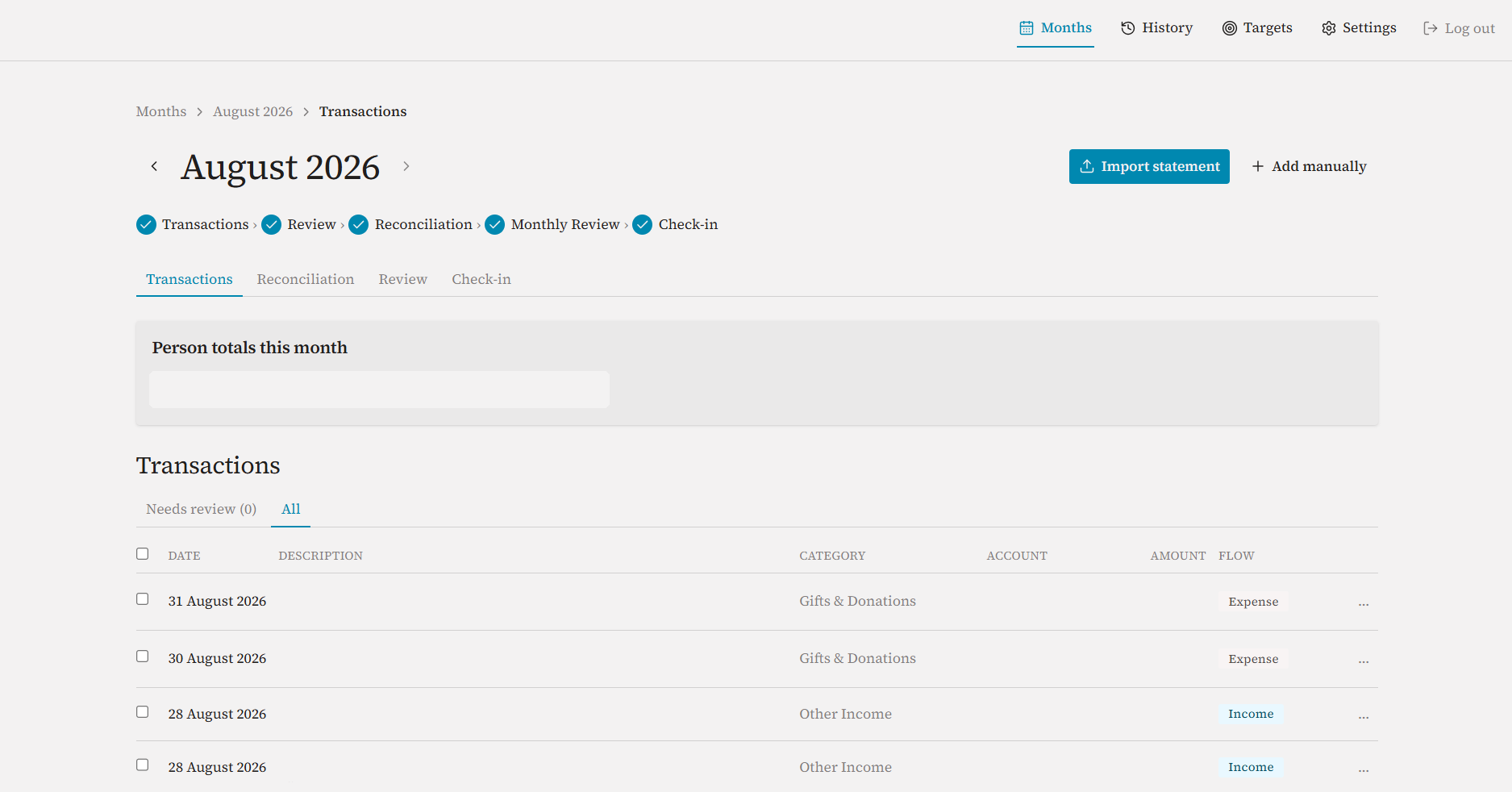
- A guided month-by-month workflow that moves raw transactions through review, receipt evidence and reconciliation into a confirmed financial record.
- Business receipt capture and matching, including mobile photo upload, many-to-many receipt-to-transaction matching and receipt coverage tracking.
- Business travel records with vehicle and driver tracking, saved locations, current-location capture and automatically calculated driving distance.
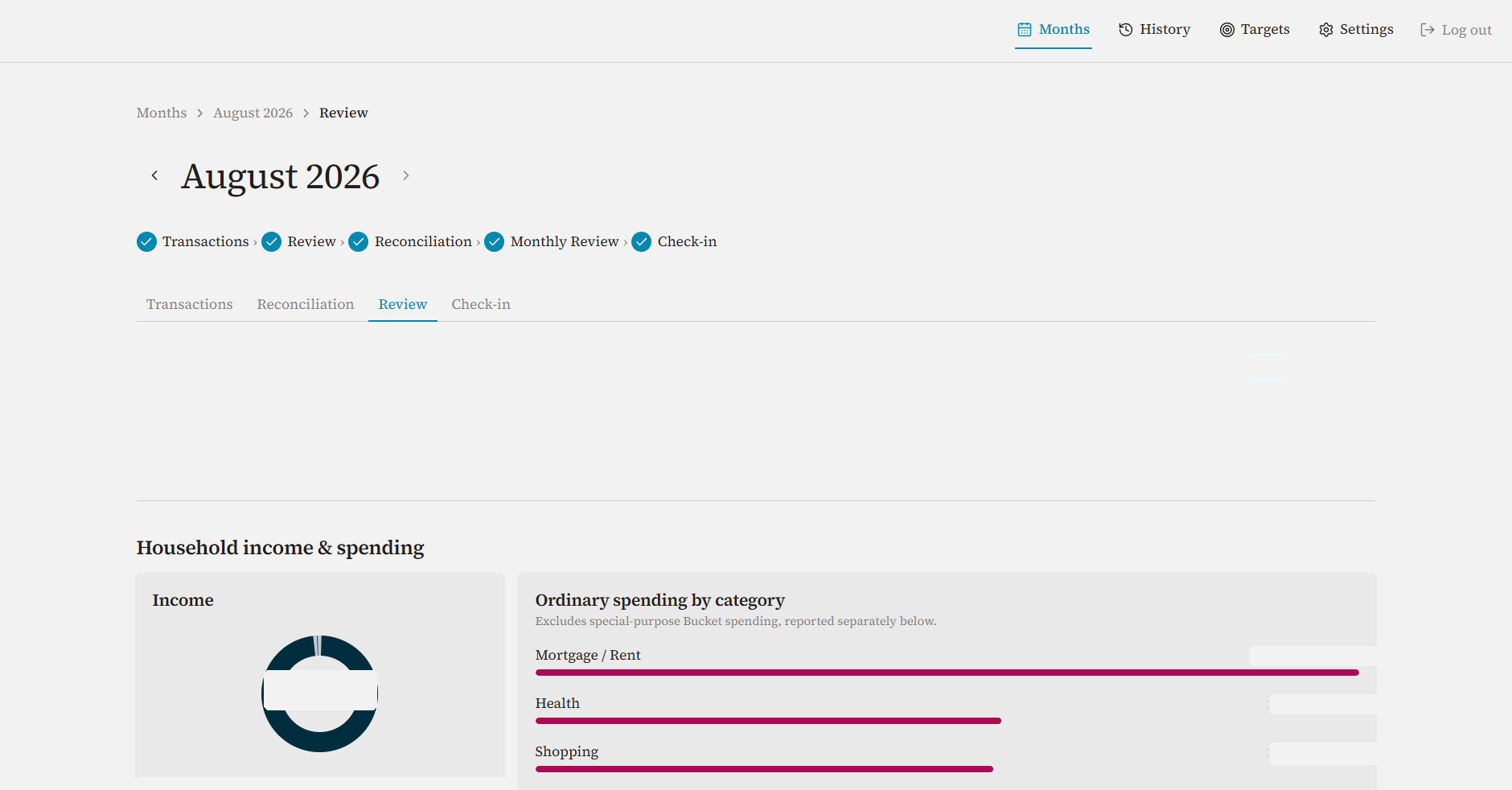
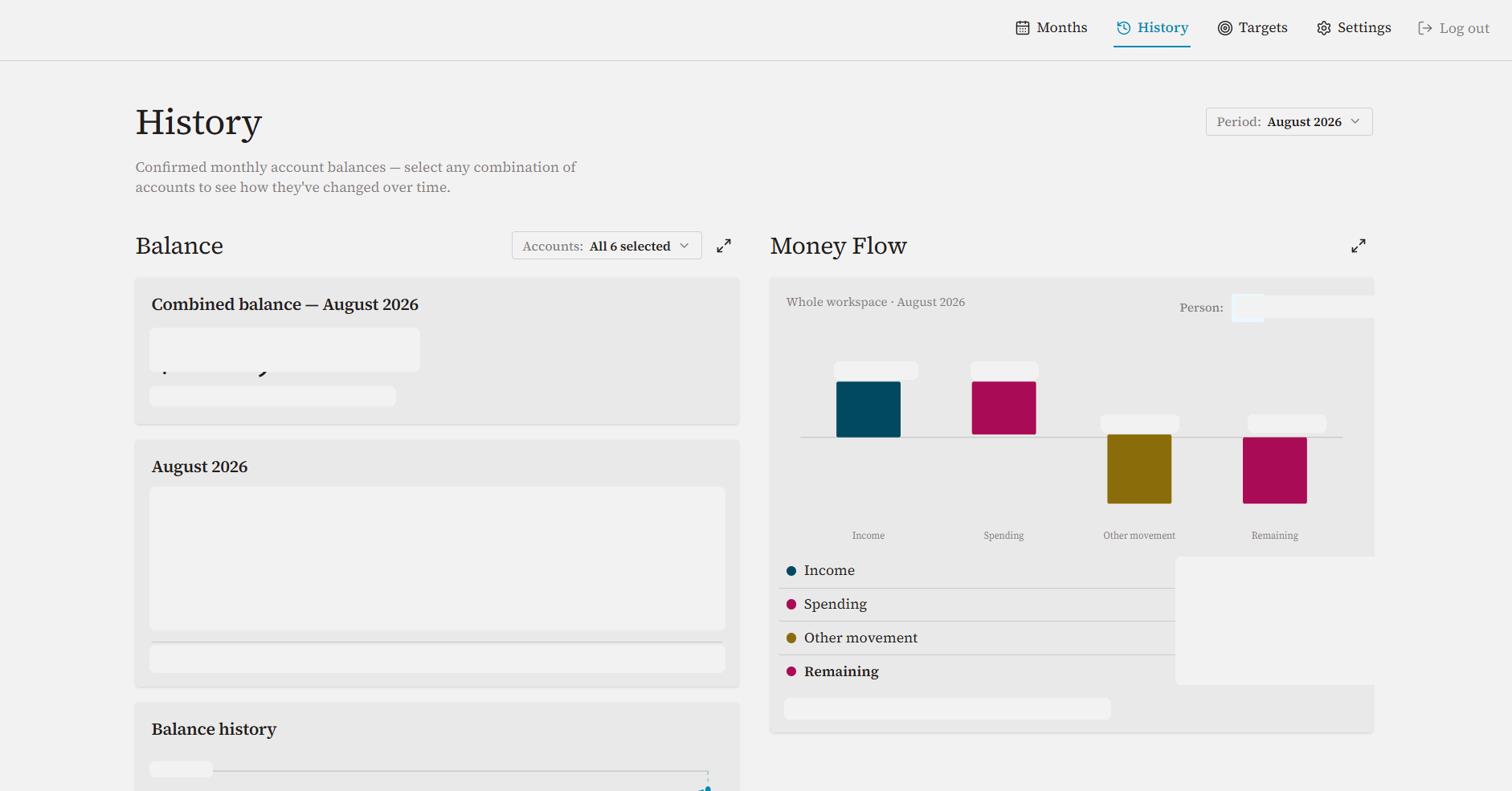
- History and reporting views covering balances, money flow, spending, ownership, owner equity and trends over time.
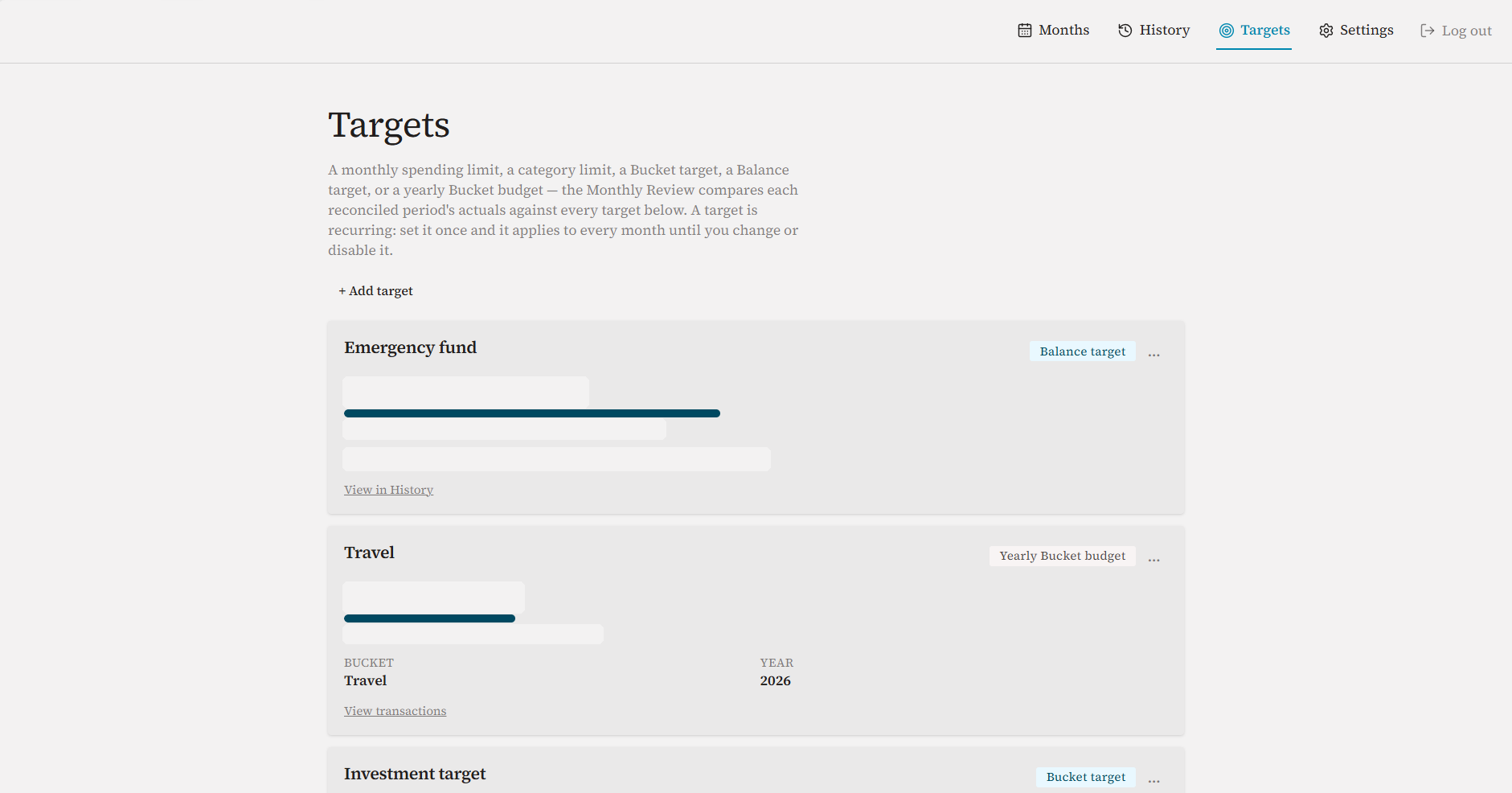
- A flexible targets system for savings balances, spending limits and recurring yearly budgets.
The finished experience
Key decisions
Reconciliation before reporting
The app treats reconciliation as the foundation rather than an afterthought. Transactions are reviewed and balances confirmed before the monthly review is treated as complete, so reporting is based on checked data rather than estimates.
A workflow, not just a dashboard
Instead of leaving every month permanently 'in progress', Finance Review guides each period through transactions, review, receipts, reconciliation and monthly review. Progress is visible, but the interface stays focused on the current task.
Separate financial meaning from cash movement
Internal transfers, external movements and owner equity all affect account balances, but they do not mean the same thing as income or spending. The data model keeps those flows explicit so reports stay financially meaningful.
Evidence belongs beside the transaction
Business receipts are captured independently and matched to transactions later, rather than forcing users to enter everything in one step. This supports real-world timing, mobile capture and many-to-many evidence without creating fake financial records.
One application, multiple financial contexts
Personal and business workspaces share the same core application and reconciliation model, while business-only concepts such as ownership, owner equity, receipts and vehicle logs appear only where they are relevant.
Private by design
Finance Review is a working private product rather than a public SaaS. That let me focus on solving the real operational problem — reliable financial review — instead of adding marketing, billing or public onboarding that the project did not need.
The result
- A single system for personal and small-business financial review across multiple accounts and users.
- A repeatable monthly process for import, classification, receipt evidence, reconciliation and review instead of rebuilding the picture manually each month.
- Clear separation between spending, transfers, external movements and owner equity, improving the usefulness of reports and reconciliation.
- A practical business-evidence workflow covering receipts and vehicle travel without turning the app into a tax or accounting product.
- Meaningfully less manual financial administration and a much clearer view of what still needs attention each month.
Private application for personal and small-business use.